.comment-link {margin-left:.6em;}

jueves, agosto 17, 2006

La Sociedad Red de Manuel Castells

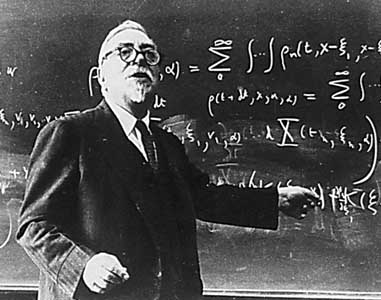
Manuel Castells es una especie de referente contemporáneo. Quizá por haber estudiado en BCN, pero su nombre siempre estuvo dando vueltas, tanto cuando trabajé en el Ayuntamiento de Barcelona como cuando empecé a estudiar interactividad e interacción persona-máquina.

Su trilogía sobre la sociedad red, es comparada -por Giddens y otros- como los trabajos realizados por Marx y Weber. Cierto o no, el discurso de Castells se ha convertido como en una interface entre los desarrollos digitales (básicamente producto de la aparición de Internet) y la reorganización político-económico-social de nuestra globalizada sociedad.

Lejos de estar desaparecido, como creía, Castells se ha refugiado en la University of Southern California, para concentrarse en los medios de comunicación masiva y su impacto en las transformaciones contemporáneas.

Dejo aquí algunos extractos de una entrevista, que recomendamos leer:

Digital Convergence: “We have these new words, such as new media, multimedia, to explain the changes that have taken place. We can no longer understand any medium without language and interaction – without multimodal processing. Even if television is television and radio is radio, there is an increasing connection, a real-time interactivity, between different kinds of communications. We are now clearly moving towards an integration of all kinds of media and communications, which are deeply interconnected”.

Network in the theory of communication: “I don’t think you can have a serious theory in communication nowadays without a network theory. I think network theory is the heart of communication theory, because it opens up the possibility of seeing, for instance, convergence, multimodality, interactivity”.

The networking of production, the differentiation of consumption, the decentring of power and the individualization of experience are reflected, amplified and codified by the fragmentation of meaning in the broken mirror of the electronic hypertext, where the only shared meaning is the meaning of sharing the network.
[More: http://www.chet.org.za/networksoc.html].

Digital Divide: The digital divide is about access to the global. More important, for me, is what to do when there is access, where to find things and how to find them, and what to do with the information you find to produce knowledge and to perform tasks. This is the fundamental issue. …. Individuals look for connections; …. Even nowadays large parts of the world are not connected.

Fuente: Terhi Rantanen "The message is the medium: An interview with Manuel Castells" Global Media and Communication, Volume 1(2): 135-147, 2005

jueves, mayo 17, 2007

Entrevista a Manuel Castells en educ.ar


Manuel Castells es uno de los referentes de la sociología contemporánea. Aquí un interesante registro de las entrevistas de Piscitelli (educ.ar) hizo al autor de la Era de la Información. Ver transcripción de la entrevista. [Ir a la segunda parte].

Pero no se confundan señores Castells no sólo habla de redes y de sociedad del conocimiento. También es un destacado velocista catalán.

Ver video en pantalla completa: primera parte, segunda parte.

Etiquetas: , , ,

martes, enero 10, 2006

Entrevista a Manuel Castells

"...allá donde hay dominación, hay resistencia a la dominación. Y como la globalización actual es asimétrica y favorece ciertos grupos de interés y ciertos valores, hay y habrá resistencia de distinto tipo... " (Manuel Castells)

miércoles, enero 23, 2008

¿Por qué seguir leyendo a Castells?


En el mosaico socio tecnológico contemporáneo que nos ha tocado vivir, no pareciera haber suficientes elementos que contribuyan a comprender la sociedad post TV.

Época inconclusa, de transiciones, donde el híbrido y las versiones beta son lo de hoy. No sólo en tecnología sino que en cuestiones de género, ciudadanía, profesionalización, estructura organizacional, educación, entre otros. Por ello, ofrecer un panorama de análisis a quienes se interesan por reflexionar en torno a estos temas no es tarea fácil. Probablemente otro hara-kiri académico.

Sin embargo, desde este punto de vista el caleidoscopio metamórfico de nuestros días, lo más sensato es atender la complejidad como una condición "sine qua non" de la fotografía digital retocada de nuestros días.

Por eso traigo aquí un texto que encuentro en ictlogy sobre Manuel Castells. Este paper (Materials for an exploratory theory of the network society [2000], pdf) resume en unas cuantas páginas la generosa trilogía de este catalán y acuña muchas ideas que atan cabos en un tempestuoso océano de charlatanes.


Aquí algunos apuntes digitales:

Network society’: Random combination of social events in a preexisting, historically determined, social structure. A network is a set of interconnected nodes. They are the most flexible, and adaptable forms of organization, able to evolve with their environment and with the evolution of the nodes that compose the network. Information networks, contribute to enlarge the transformation of social structure in the information age.

‘Technology’: The use of scientific knowledge to specify ways of doing things in a reproducible manner. Plays an essential role in framing the relationships of experience. Technology… as a specific layer of the social structure, following an old tradition in human ecology. Technology as a material tool, and meaning as symbolic construction, through relationships of production/consumption, experience, and power, are the fundamental ingredients of human action. Technology is not the cause of the transformation; it is indeed the indispensable medium.

Technological paradigm’: A cluster of inter-related technical, organizational, and managerial innovations, whose advantages are to be found in their superior productivity and efficiency in accomplishing an assigned goal, as a result of synergy between its components.

'Internet': It becomes a universal tool of interactive communication, as we shift from computer-centred technologies to network-diffused technologies. Internet is becoming a very instrumental tool of management of new forms of life, including the building of on-line communities of support and collective learning.

Informational new economy’ (a new brand of capitalism): The capacity of generating knowledge and processing/managing information determine the productivity and competitiveness of all kinds of economic units, be they firms, regions, or countries.


Networked new economy’: At the heart of the connectivity of the global economy and of the flexibility of informational production, there is a new form of economic organization; the network enterprise.


The State’: It is undergoing a process of dramatic transformation. The weakening of its power and credibility induce people to build their own systems of defense and representation around their identities, further de-legitimizing the state. The state in the information age is a network state, a state made out of a complex web of power-sharing, and negotiated decision-making between international, multinational, national, regional, local, and non-governmental, political institutions. The state reacts to its bypassing by information networks, by transforming itself into a network state.

Culture’: The fragmentation of culture and the individualization of positions in relationships of production, lead jointly to a growing diversification of consumption patterns.

Lectura recomendada:

"Socialización del conocimiento académico con el uso de tecnologías de información y comunicación (TIC)". Rixio Nava Muñoz [Revista Venezolana de Información, Tecnología y Conocimiento].

Etiquetas: , , ,

martes, abril 25, 2006

redes tecno-sociales

Para ver las redes de e-rgonomic
(haz click en la imágen, necesitas java)


Internet y la Sociedad Red (apuntes de Castells)
...Cuando Wellman intentó medir qué influencia tenía Internet sobre las otras sociabilidades, encontró algo que contradice los mitos sobre Internet. Es lo que el llama "cuanto más, más", es decir, cuánto más red social física se tiene, más se utiliza Internet; cuanto más se utiliza Internet, más se refuerza la red física que se tiene.

… otra serie de estudios, como los realizados por Marcia Lipman, en Berkeley, que ha estudiado cientos de comunidades virtuales, señalan otro dato fundamental, y es que las comunidades virtuales son tanto más exitosas, cuanto más están ligadas a tareas, a hacer cosas o a perseguir intereses comunes juntos.

…Más que ver la emergencia de una nueva sociedad, totalmente on line, lo que vemos es la apropiación de Internet por redes sociales, por formas de organización del trabajo, por tareas, al mismo tiempo que muchos lazos débiles, que serían demasiado complicados de mantener off line, se pueden establecer on line.

…En conclusión, […] esa sociedad red es la sociedad que yo analizo como una sociedad cuya estructura social está construida en torno a redes de información a partir de la tecnología de información microelectrónica estructurada en Internet. Pero Internet en ese sentido no es simplemente una tecnología; es el medio de comunicación que constituye la forma organizativa de nuestras sociedades, es el equivalente a lo que fue la factoría en la era industrial o la gran corporación en la era industrial. Internet es el corazón de un nuevo paradigma sociotécnico que constituye en realidad la base material de nuestras vidas y de nuestras formas de relación, de trabajo y de comunicación. Lo que hace Internet es procesar la virtualidad y transformarla en nuestra realidad, constituyendo la sociedad red, que es la sociedad en que vivimos.

[Fuentes: -texto- Conferencia sobre la Internet y la Sociedad Red (Manuel Castells).Lección inaugural del programa de doctorado sobre la sociedad de la información y el conocimiento. UOC. 1999 -touchgraph- Claudio Bravo de e-comunicacion]